Case Study · 2020–2021
Legacy Affiliate Commission Platform
Legacy Affiliate Commission Platform Modernization
Senior Commission Developer — Commission Processing Modernization
Modernization and ongoing evolution of a long-lived affiliate commission platform supporting varied direct-selling workflows. My backend-focused work covered reusable processing workflows, relationship and reporting views, tracked operational execution, and payout-compatible support for client-specific implementation needs.
This case study describes legacy work I completed during prior employment around 2020–2021. The system has since been replaced; I do not speak for or represent my former employer.
- PHP
- MySQL
- jQuery
- Bootstrap
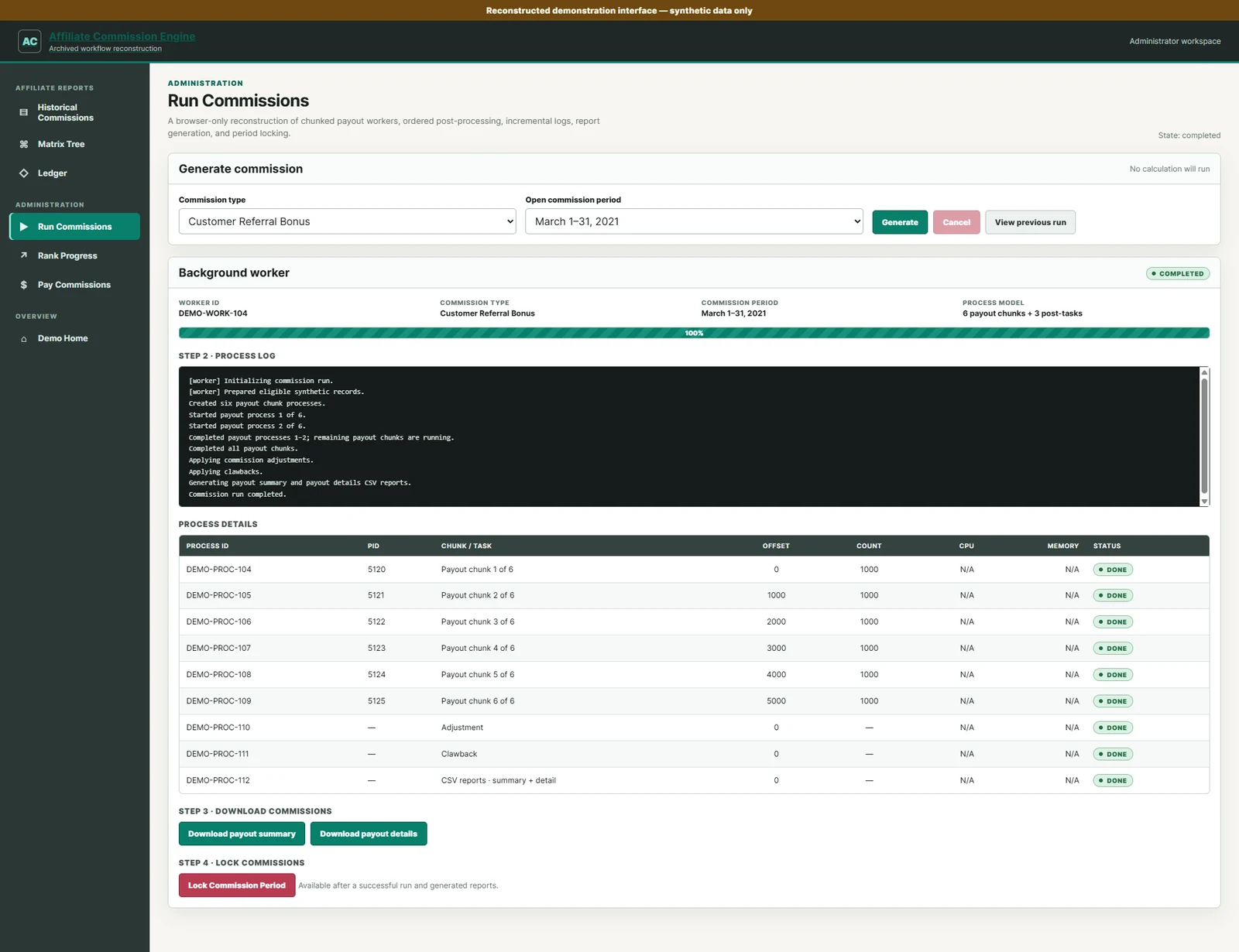
Platform and Business Context
A reusable affiliate commission platform behind varied workflows.
The affiliate commission platform supported direct-selling workflows requiring calculation, reporting, administrative review, and payout-compatible outcomes. It combined relationship context, operational records, and client-specific business requirements.
I led backend modernization of a reusable commission-processing foundation while maintaining, enhancing, and customizing client-specific implementations.
Legacy Constraints
Gradual modernization had to maintain operational continuity.
Long-lived implementations had established workflows, compatibility needs, and financially sensitive processing. Modernization therefore had to preserve business behavior while improving maintainability and clarity for future client-specific work.
The work was incremental rather than a claim of full-system replacement.
Role and Contribution Boundary
Backend leadership for a reusable foundation and client-specific implementations.
My role covered full-stack development, with most of my contribution focused on backend systems, commission processing, reporting, integration boundaries, and the administrative interfaces supporting those workflows.
Some systems predated my time with the former employer, while other engagements involved new implementations or substantial customizations. I independently handled several responsibilities and collaborated with other developers on others.
The work does not claim original implementation of every system, full platform ownership, or sole frontend ownership.
Platform Modernization
Legacy PHP application areas evolved onto a modern PHP framework.
I introduced clearer application boundaries and reusable backend structures while preserving established compensation behavior and compatibility needs. This gave client-specific work a more maintainable foundation without presenting the work as a simultaneous replacement of every legacy implementation.
The resulting approach emphasized maintainability, understandable boundaries, and incremental delivery around established operations.
Service Boundaries
Clearer service communication supported a more consistent operating context.
I contributed to clearer authenticated service communication and more consistent application context across established and modernized areas. This reduced ambiguity at system boundaries without requiring a full rewrite of the existing back office.
No credentials, identifiers, routes, tokens, or private implementation mechanics are included in this case study.
Commission-Processing Lifecycle
Processing moved from operational context to reviewable, payout-compatible outcomes.
At a high level, a processing period assembled relevant operational context, applied client-specific business rules, persisted reviewable outcomes, and produced reporting and payout-compatible records. The lifecycle is described at an outcome level and does not disclose proprietary formulas, rates, thresholds, plan names, or member data.
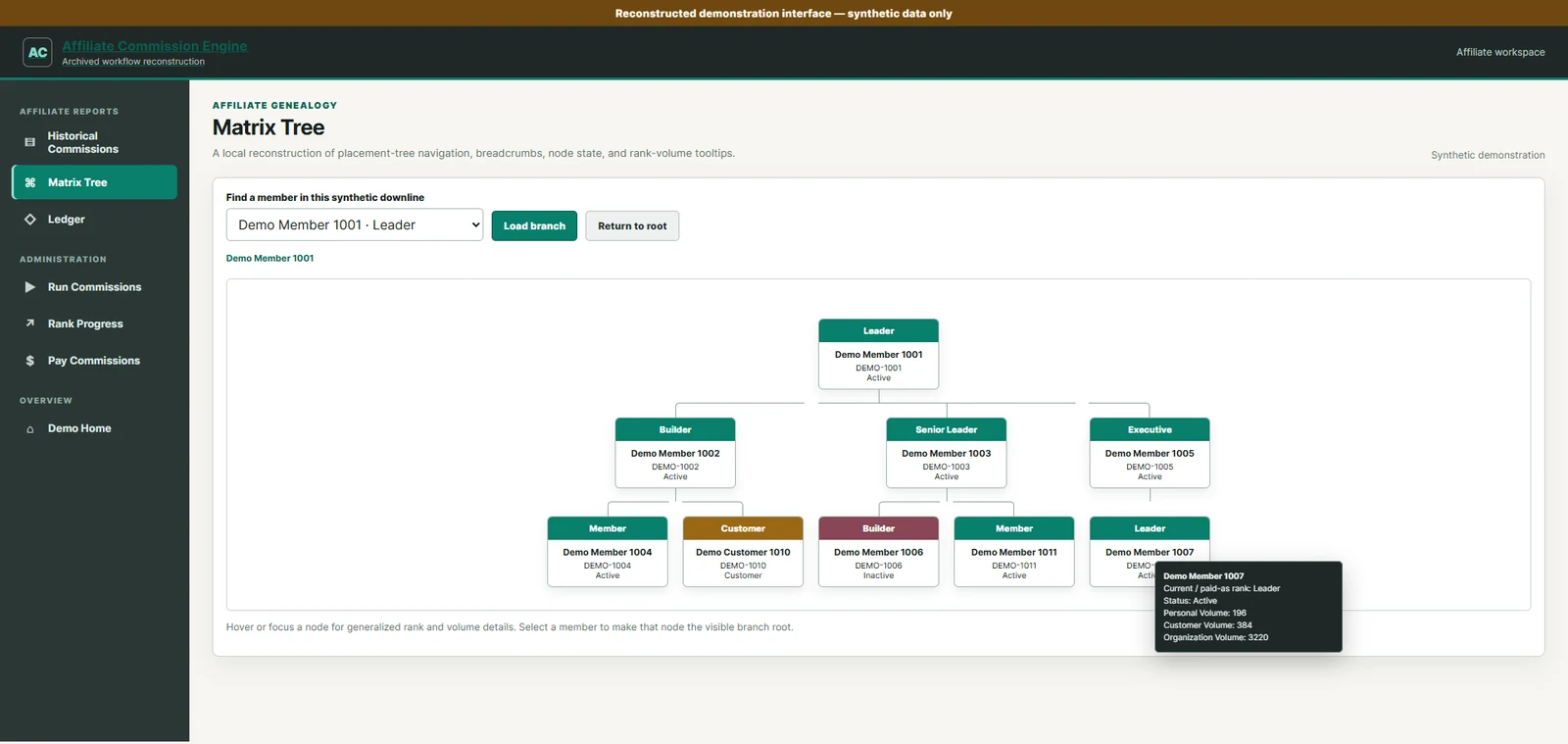
Relationship and Processing Context
Generalized relationship views supported operational review.
I contributed to relationship, qualification, and calculation context that made commission-processing workflows easier to review. This reconstruction is generalized and does not disclose client plan structures, proprietary rules, thresholds, or member data.
Background Execution and Operational Flow
Long-running work could be tracked and reviewed in context.
I designed and supported tracked operational execution for long-running commission work, including progress visibility, reviewable logs, report generation, and controlled completion steps. This gave operators clearer context around running, completed, cancelled, and failed work without making an unsupported performance claim.
Reporting, Reconciliation, and Payment Workflows
Supporting records remained visible to operators.
I expanded reporting and administrative support for reviewable records, reconciliation, and payout-compatible workflows. The work focused on helping operators understand processing states and supporting outcomes without identifying a provider, client implementation, payment data, or delivery arrangement.
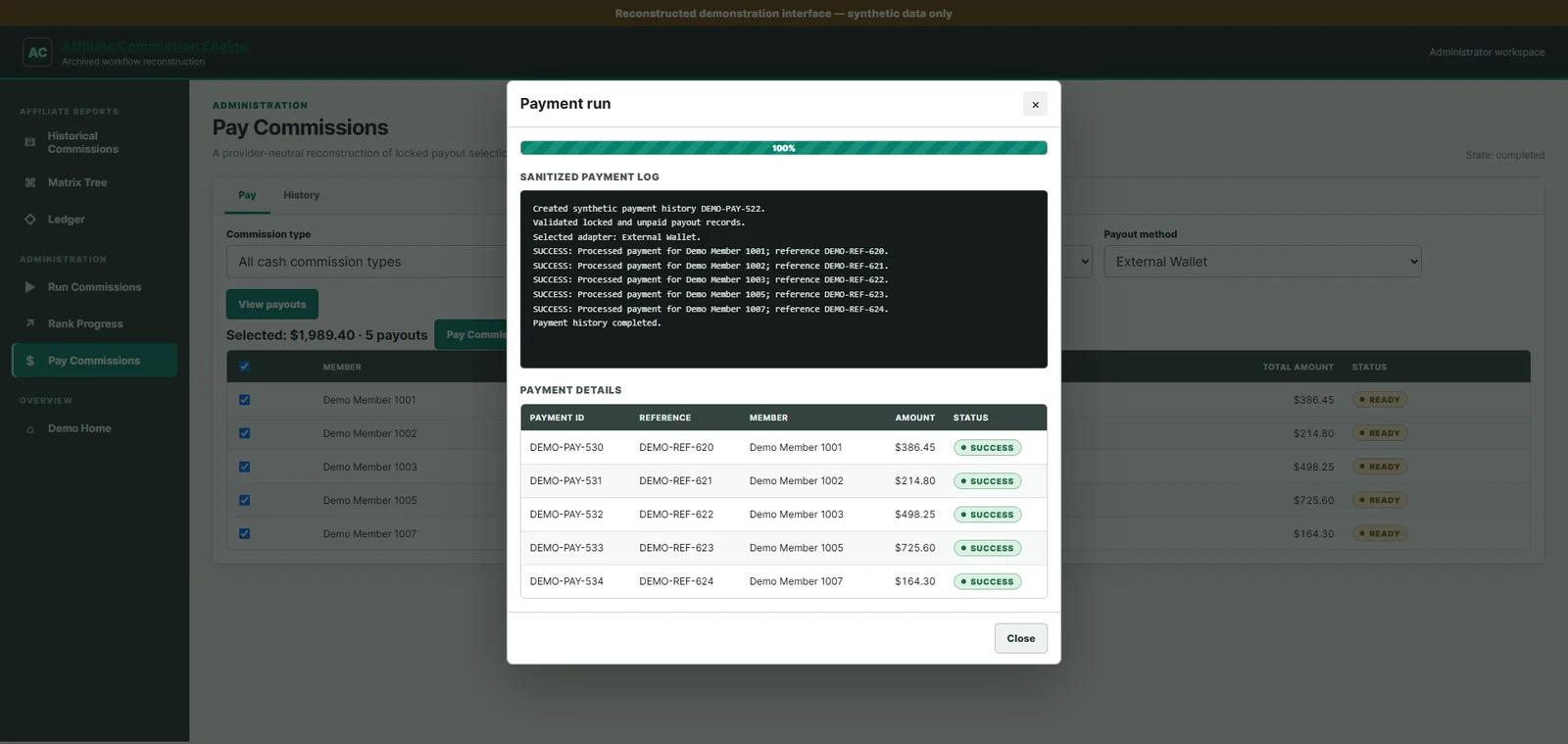
Payment Workflow Boundaries
Completion records supported reviewable payment workflows.
I supported provider-neutral payment workflow boundaries alongside reporting and reconciliation needs. The example shows synthetic, generalized completion records only; it does not imply that every workflow was fully automated or that every engagement reached production.
Validation and Technology Context
Financially sensitive logic required disciplined review.
Validation relied on business-rule examples, reconciliation, staged processing, review of results, report comparisons, and stakeholder review during applicable early operating cycles. This case study does not claim comprehensive automated testing, test totals, or coverage percentages.
The technology context is intentionally broad: a legacy PHP stack was modernized onto a modern PHP framework, with relational-data and web-application context supporting the work.
Available for senior remote opportunities